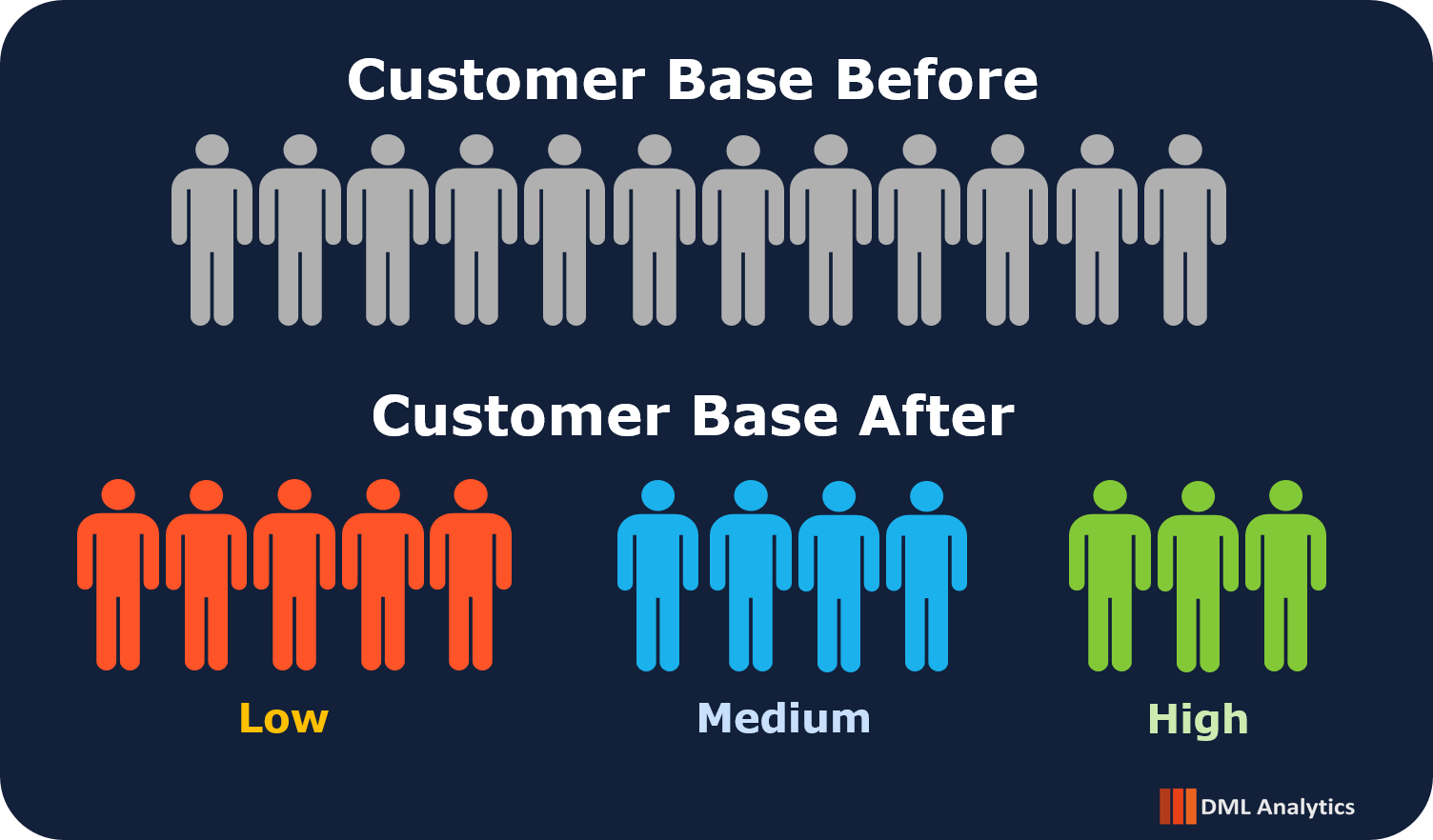
Propensity modelling estimates how likely each customers is to take a specific action based on their past behaviour, giving you a priority list of who to focus your sales and marketing effort on.
From first data review to scored output, the analysis is shaped around identifying the high-value opportunities hiding in your data.
What you’ll gain
A propensity model brings order to an otherwise undifferentiated list of customers and prospects, so your team stops treating a cold lead the same as a warm one.
Know who to focus your efforts on
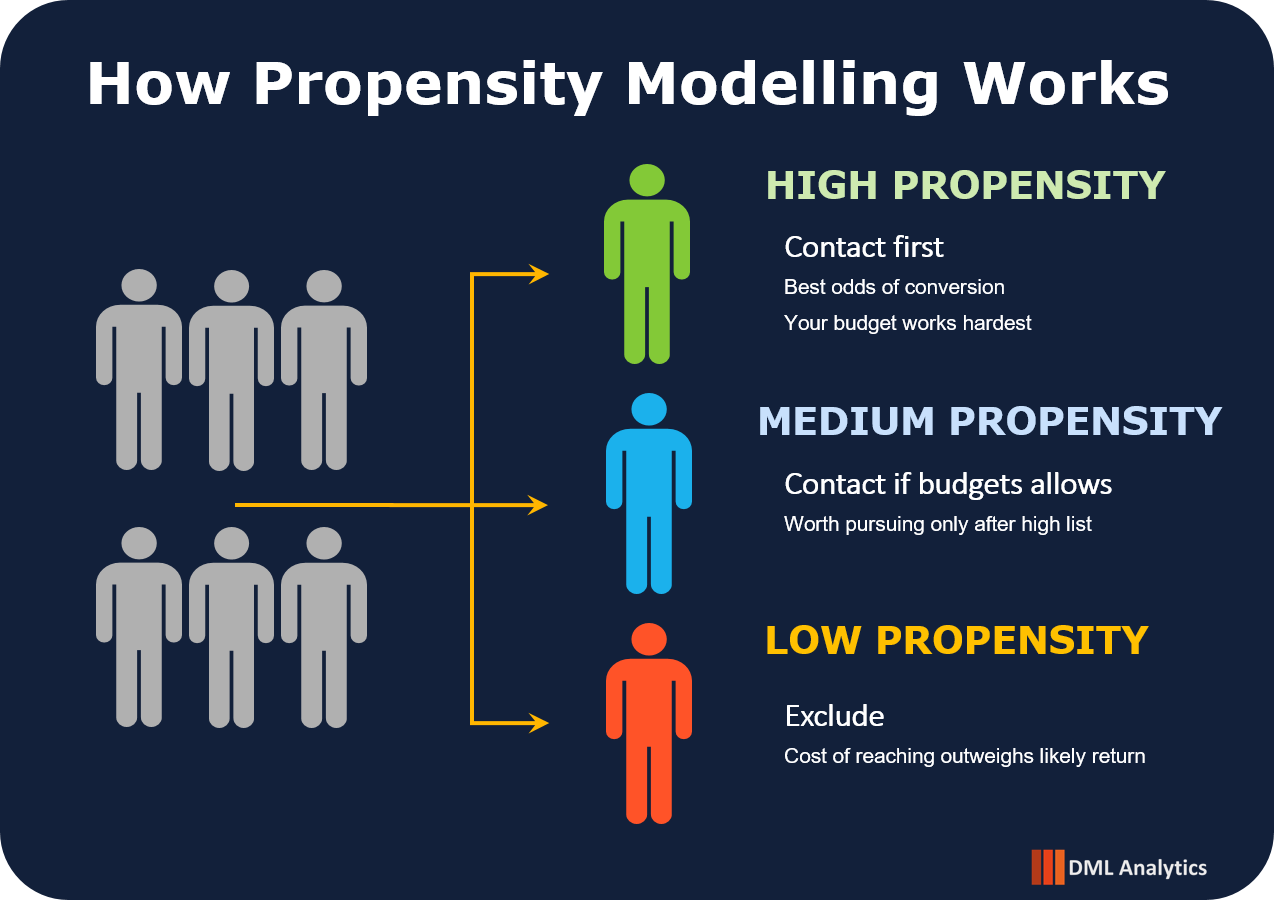
Scoring each contact against patterns in historical conversion behaviour pinpoints the prospects most worth pursuing.
Concentrate time and budget on the prospects with the highest score and maximise your conversion rate.
When propensity modelling is useful
Propensity modelling works best when you need to prioritise limited sales or marketing resources across a large and varied customer or prospect base. Common situations include:
Campaign Efficiency - You are running a direct campaign and want to concentrate spend on the contacts most likely to respond
Inbound/Outbound Wastage - Your outbound sales team is spending equal time on prospects with very different chances of converting
Proactive Retention - You want to spot customers at risk of disengaging so you can intervene before they churn
How I work

Data Audit & Alignment
Map available data sources and confirm linkability via persistent ID
Agree target behaviour and prediction window
Assess data volume, quality, and coverage

Build & Compare
Engineer features & estimate multiple models
Evaluate and compare models performance
Select best-fitting model for data and objective

Validation & Sign-Off
Stress-test outputs & validate with business team
Agree final model & commercial threshold

Scoring & Deployment
Score full customer or prospect base
Deploy to CRM/CDP if required
Agree refresh cadence
Solution are tailored to business context, data maturity, and specific behaviour you need to predict.