Customer Segmentation

Know Your Customer Base Before You Market to It

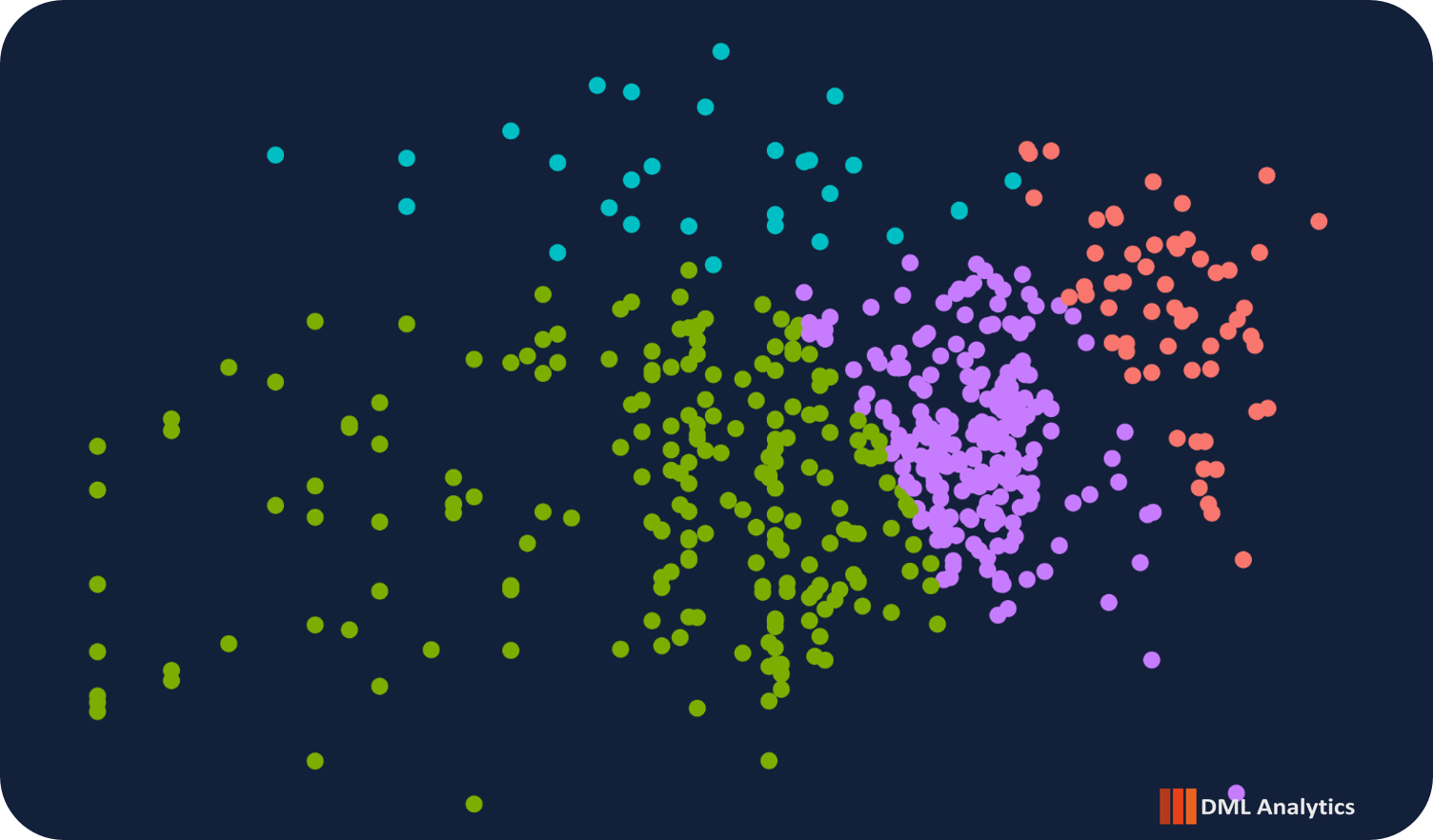
Scatter plot of a customer base grouped into four colour-coded clusters, each representing a distinct segment with shared behavioural and value characteristics.

Segmentation divides your customer base into groups with shared behavioural and value drivers, so you can prioritise audiences with the highest growth potential.

From initial data audit to final delivery, I will partner with you to turn analysis into commercially grounded profiles that show which segments are driving growth and where opportunities lie.


Book a 30-minute call


What you’ll gain

Segmentation replaces assumptions about your customer base with evidence, giving your marketing budget a more precise commercial foundation.


See who your customers are
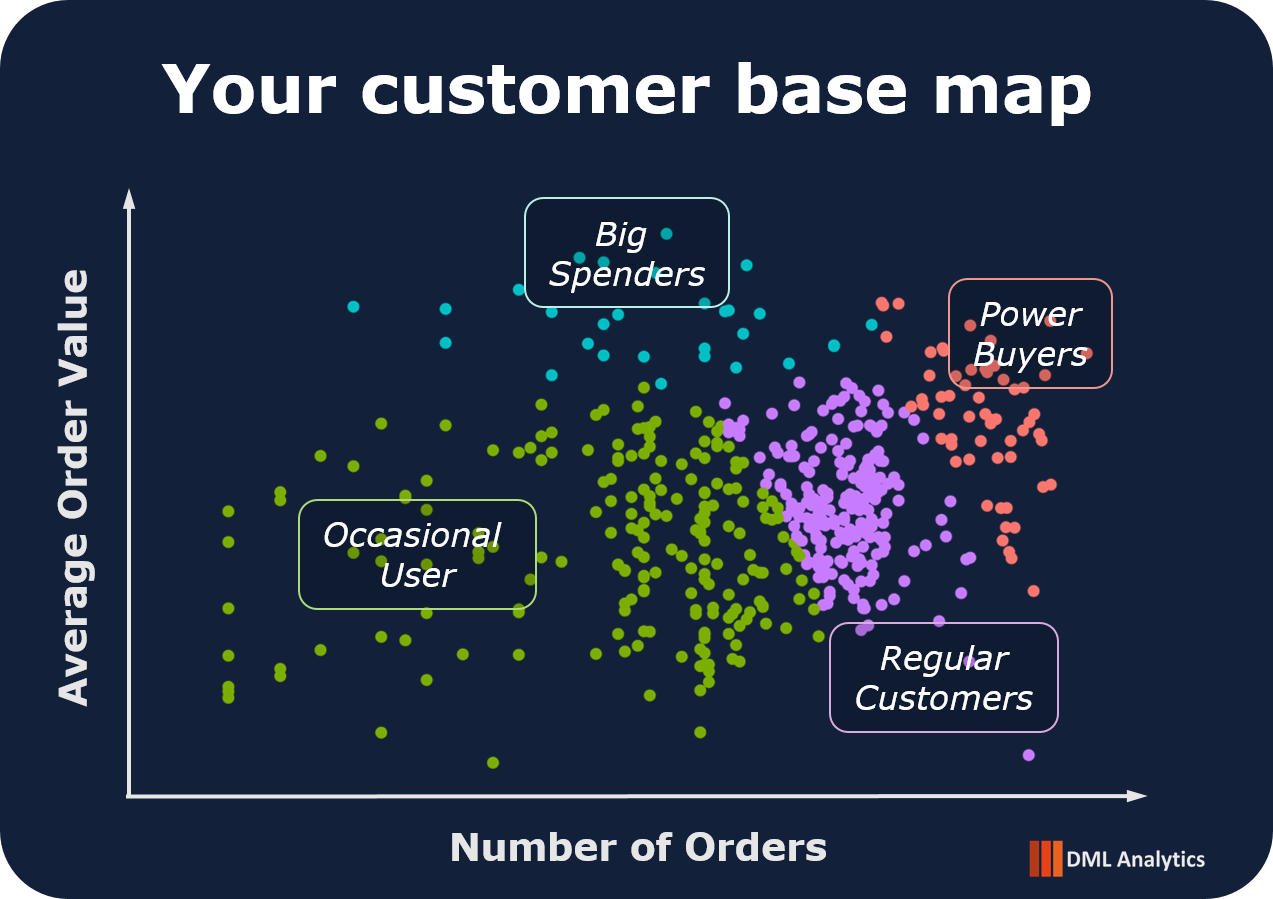
CScatter plot mapping customers by average order value and number of orders, with four labelled clusters: big spenders, power buyers, occasional users, and regular customers.

Segmentation strips away the assumptions to reveal how customers engage with your business.

Get a clear picture of how your customer base is structured, how each group contributes to revenue, and where the headroom to grow is.


Connect channel mix with the audiences it recruits

Mapping segments to acquisition channels tells you which marketing mix recruits your most valuable customers.

Tailor your marketing mix to attract the customer profiles that most matter to you.
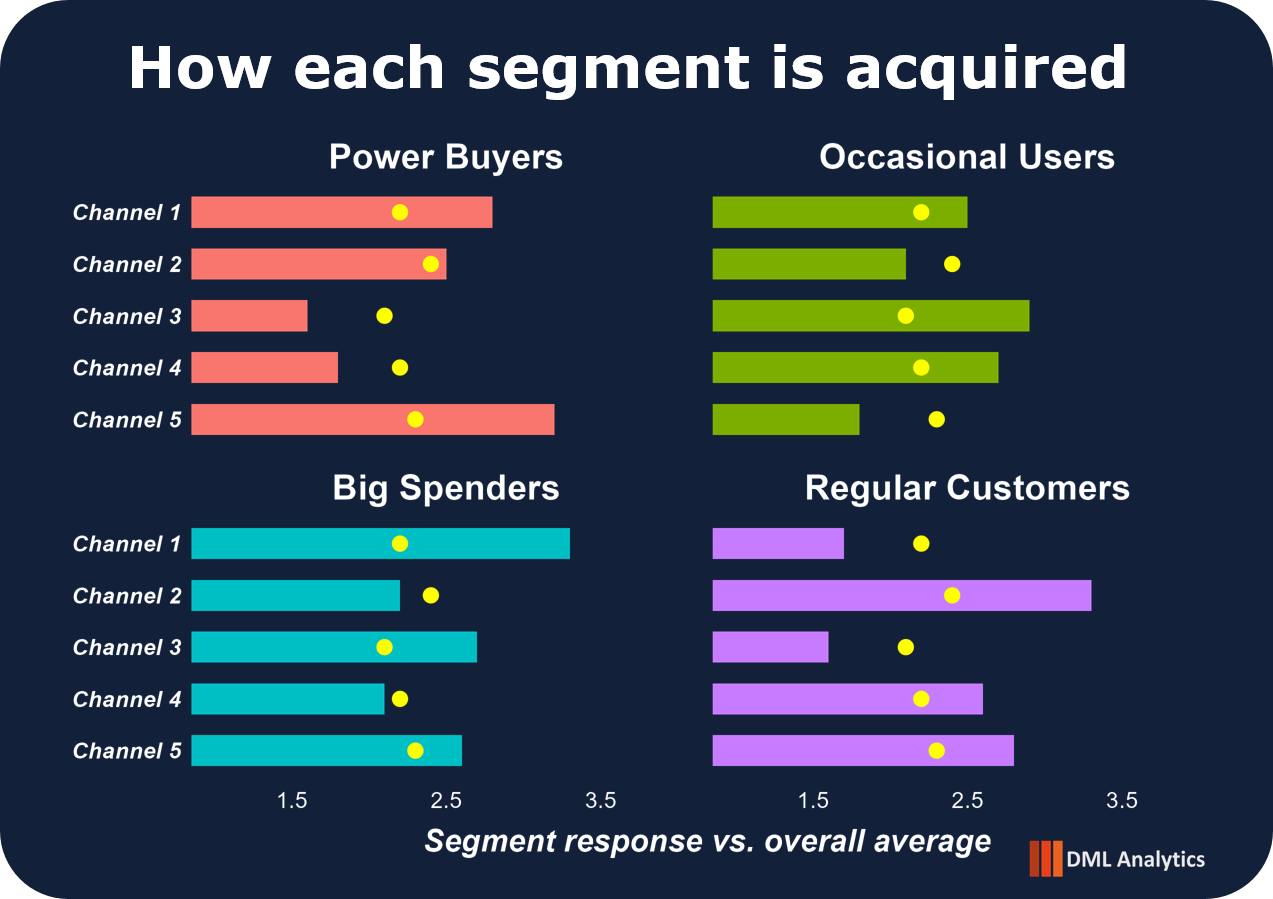
Small multiples chart showing how four customer segments respond to five acquisition channels, with each segment's channel response compared against the overall average.


Monitor segments over time

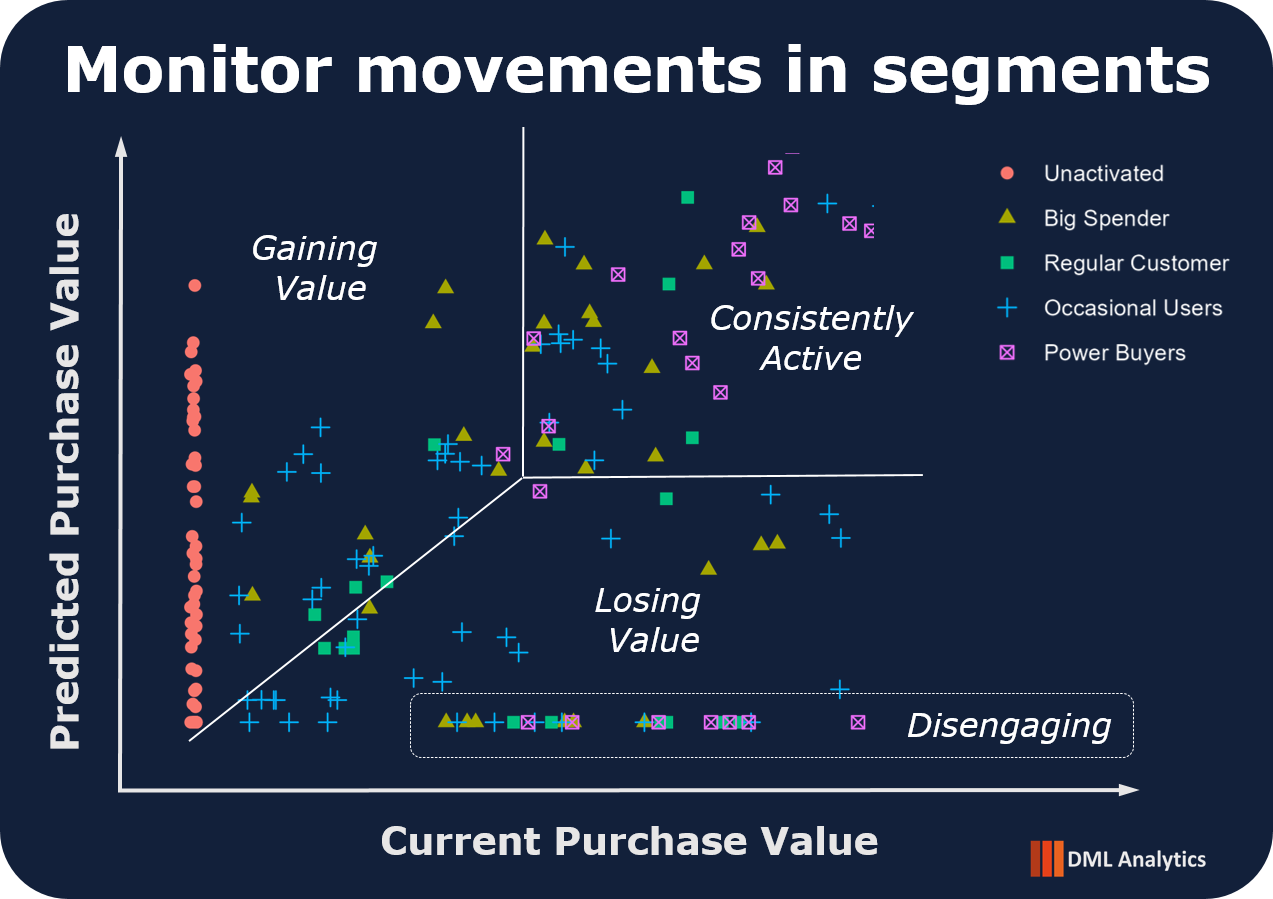
Scatter plot mapping customer segments by current versus predicted purchase value, divided into four zones: gaining value, consistently active, losing value, and disengaging.

Customers move through different segments during their lifetime of interactions with your brand.

Monitor how customers move between groups to spot cross sell and up-sell opportunities and take preventative action when they’re disengaging.


When to segment and why

Run customer segmentation when your customer base becomes large and diverse and you want to discover genuine groupings without relying on assumptions. Common situations include:

  • Plateauing Performance - Your media mix targets the full customer base the same way, and returns have stalled.

  • Acquisition Audits - You need to identify which specific channel mix and messaging brings in the highest lifetime value (LTV) customers.

  • New Market Expansion - You are launching a new product line or entering a new market and want a clearer baseline of existing demand patterns

These work as stand-alone projects but can also integrate directly into your marketing mix modelling framework to sharpen the overall picture.


How I work

Data Audit & Alignment

  • Map available data sources and confirm linkability via persistent ID

  • Agree on look-back window and key variables

  • Assess data volume, quality, and coverage

Segmentation Build

  • Select variables and configure clustering approach

  • Build and evaluate multiple solutions

  • Select optimal number of segments

Analysis & Sign-Off

  • Match each segment with commercial interpretation

  • Validate with business team & agree segment structure

Deploy & Monitor

  • Score and deploy into CRM or CDP where required

  • Agree monitoring cadence and track segments over time

Each solution is tailored to your business context, data maturity, and commercial questions you need to address.



FAQ

First-party data, such as transactions, CRM records, and website activity provide the most accurate and commercially valuable foundation for analysis.

It’s important that data sources are linkable across platforms through a persistent customer identifier.

Beyond that, the data should cover at least two to three full purchase cycles and have enough volume for the clustering algorithm to detect genuine patterns rather than noise.

Enough to capture meaningful differences across your customer base, not so many that each group becomes too small to act on. In practice, we evaluate multiple solutions and select the one that balances statistical fit with commercial interpretability.

Yes. In B2C the unit of analysis would commonly be the individual customer; whereas in B2B it is typically a company or account. The inputs change but the methodology remains the same.

Yes, that can be supported when requested. We can integrate the results of the segmentation analysis into existing infrastructures such as CRM systems and CDP platforms.

In addition to the core clustering analysis, we also support the development of scoring systems that can be deployed alongside the segmentation results.

Typically six to twelve weeks, depending on data readiness. Well-structured, accessible data moves things along quickly; gaps in quality or access extend the timeline.

The most common pattern is running segmentation alongside an marketing mix modelling to understand how each channel mix attracts different audiences, adding a layer of commercial context an aggregated top-line model alone cannot provide.

See an example of a segmented MMM in this case study.

Segmentation is grounded in first-party data and produces groups defined by measurable characteristics, whereas personas are a communication tool layered on top of that, useful for internal alignment.

They will not stay static, and they should not. We advise to refresh the segmentation at least once a year or following period of high intake of new customers to keep the results relevant for the business.

No. Segmentation is conducted using open-source frameworks whenever feasible, keeping work portable, transparent and easy to maintain & scale. This means no vendor lock-in, transparent code, and extensibility as your internal capability grows.


Previous projects