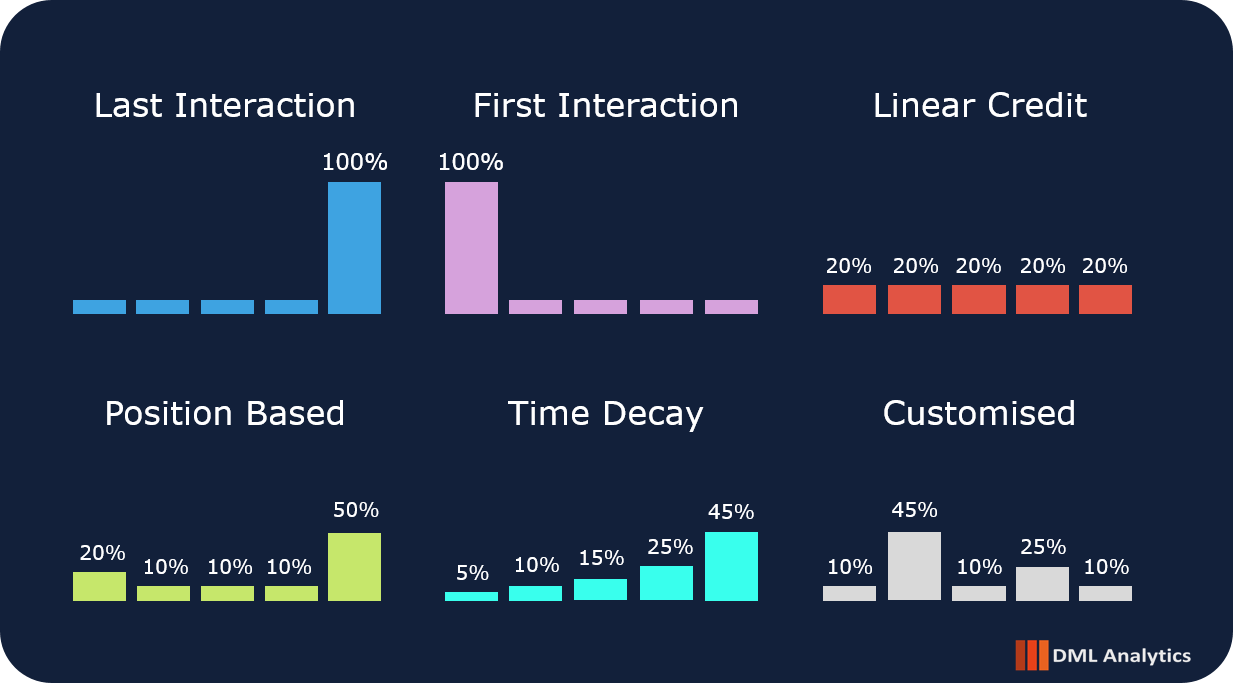
When performance relies on rule-based attribution, credit is assigned according to what model “feels right”, introducing human bias that blinds you to what truly builds demand.
Data-driven attribution helps with assigning credit across the full customer journey, giving you a more reliable base to make tactical decisions.
What you’ll gain
A data-driven attribution model gives you a single, independent view of channel contribution, so you can base your budget decisions on what the data supports.
Get a reliable channel picture
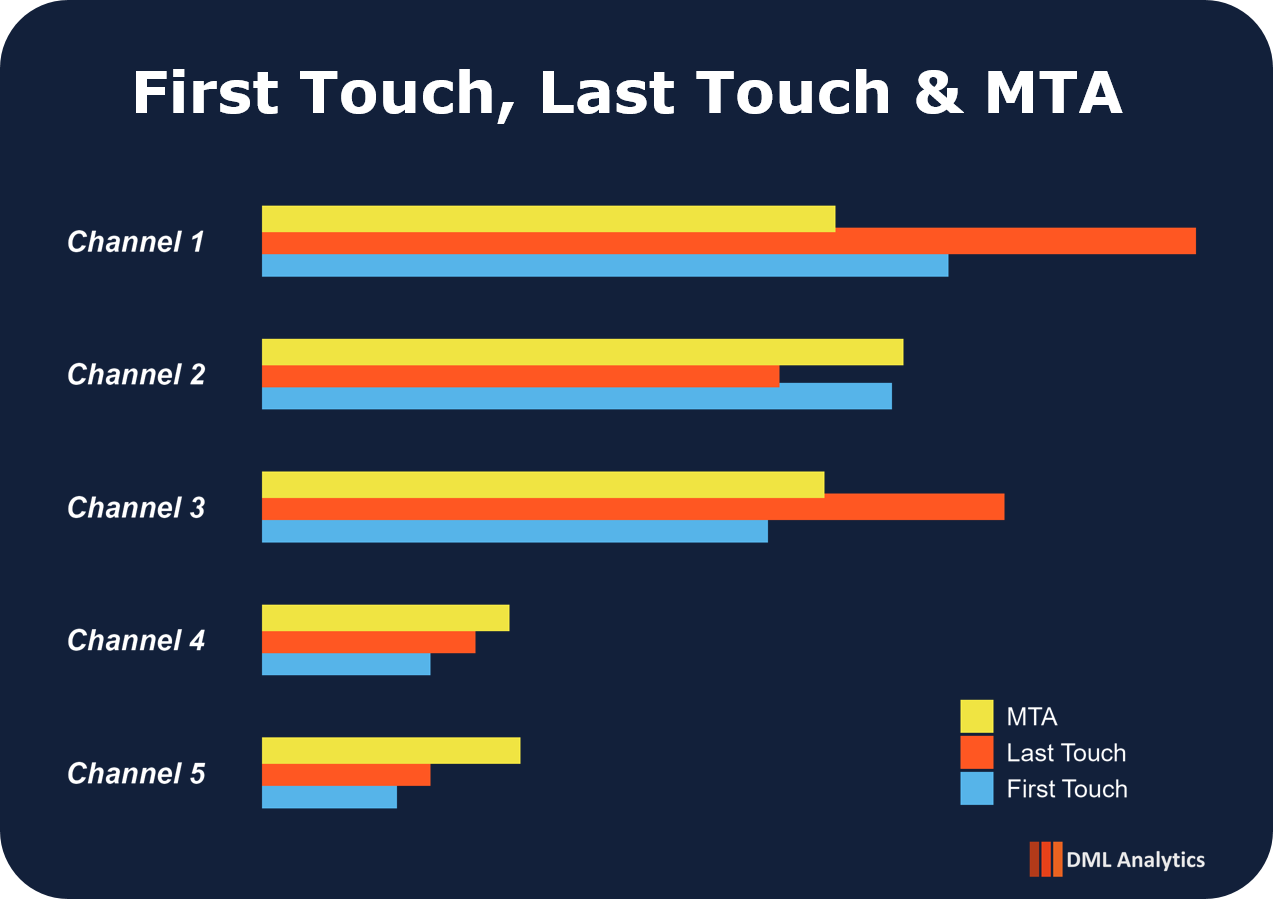
Rule-based attribution models apply fixed weights to the customer journey that have no grounding in how customers actually behave.
Data-driven attribution reads the full journey and distributes credit accordingly, so channels that build demand get recognised alongside the ones that convert it.
Turn attribution into budget decisions
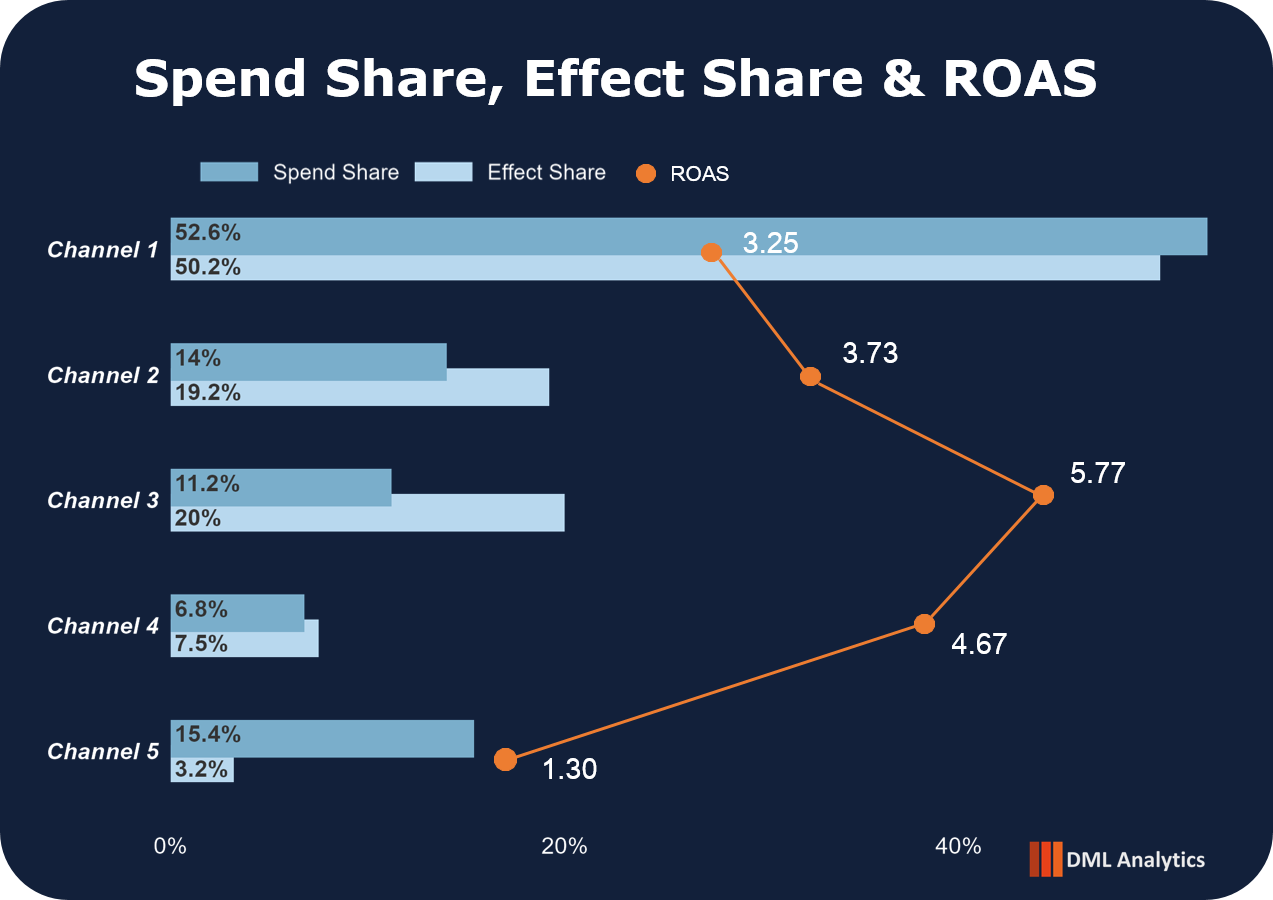
A spend share versus effect share chart is the most immediate way to put the results of your attribution model to work.
Move budget away from channels taking more than they are giving back and towards the ones returning more than they are getting.
When MTA is useful
Multi-touch attribution works best for digital-first or digital-only businesses that have been advertising for 2 years or less, have robust server-side tracking, and run minimal or no offline, influencer, or non-digital promotional activities.
Use multi-touch attribution when you need a unified, platform-agnostic view of your digital channels. Common situations include:
Inflated Platform Data - Your ad platform dashboards clock more conversions or revenue than your actual backend shows.
The Overlap Dilemma - You are running a mix of digital channels and cannot confidently pinpoint which mix is driving results.
The Bottom-Funnel Trap - Budget flows to bottom-funnel channels because they claim all the credit, leaving your upper-funnel contribution unclear.
However, MTA focuses primarily on digital interactions and struggles to account for macro factors such as price reductions, promotions, seasonality or offline advertising.
If your marketing mix is becoming more complex as your business scales, it may be time to transition to marketing mix modelling.
How I work

Data Audit & Integration
Map tracking across UTM, events, and conversions
Confirm data linkability via persistent ID
Agree look-back window

Attribution Model Build
Configure data-driven attribution model
Compare outputs & validate against actual revenue
Select model that best fits data & business question

Analysis & Sign-Off
Profile channel contribution and efficiency gaps
Agree channel view & budget allocation implications

Deploy & Recommendations
Deliver channel investment recommendations
Agree refresh cadence
Each solution is tailored to your tracking setup, data maturity, and the channel mix to measure.