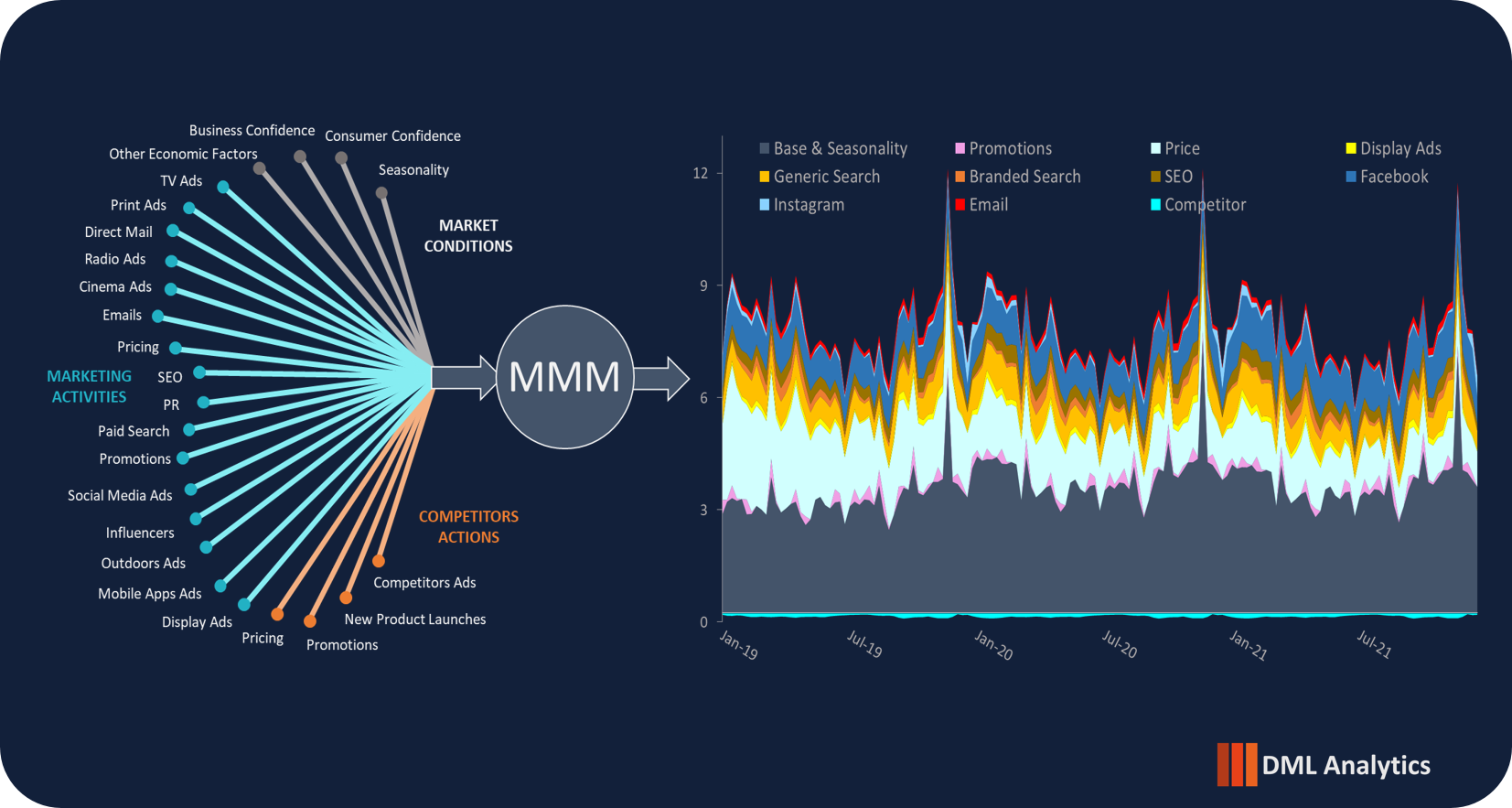
MMM offers a fuller view of what is actually driving results, so you can simulate marketing scenarios and optimising investment across channels, products, and regions.
I will partner with you from first data review to final delivery, turning MMM insights into clear budget recommendations that balance short-term goals with long-term growth.
Book a 30-minute call
What you’ll gain
MMM helps you understand what is driving revenue, where spend begins to saturate, and how to plan budgets with more confidence.
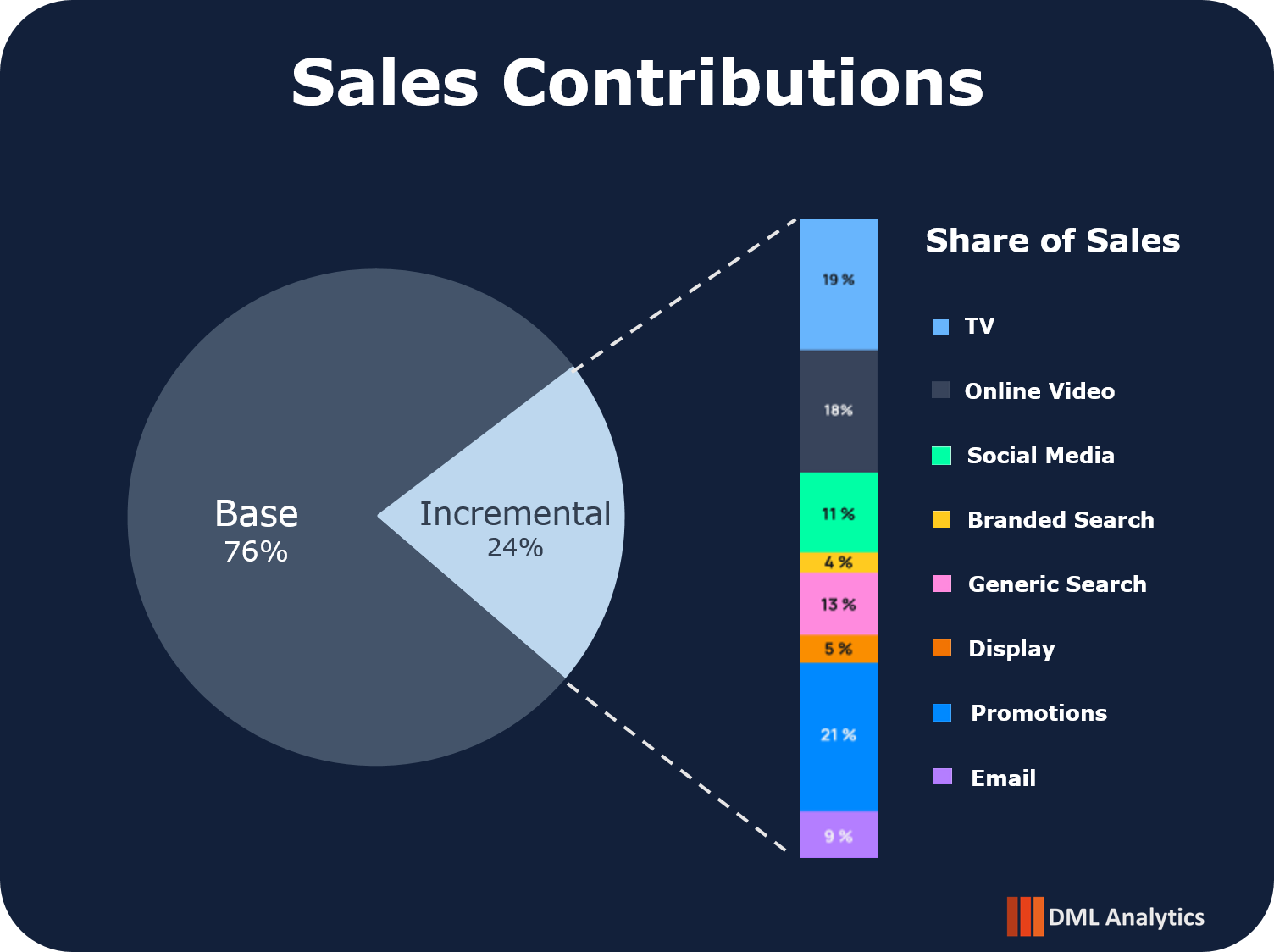
See what truly moves sales
Contribution charts turn complex model output into a picture the whole room can read.
MMM helps quantify how each channel contributes to revenue and growth.
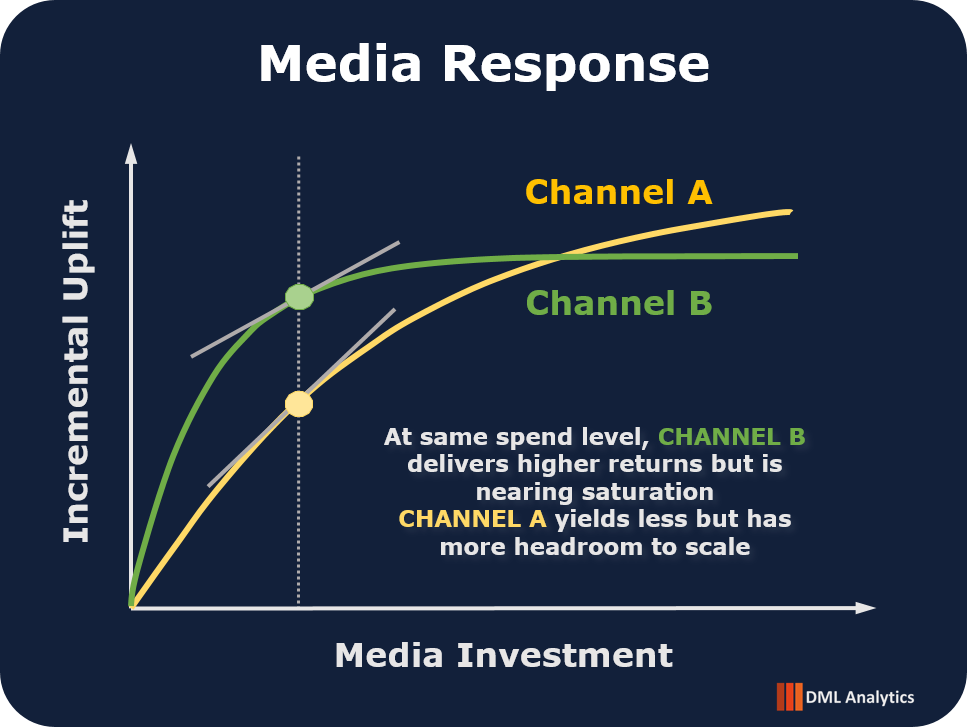
Know where investment saturates
Media response curves show you the likely return for each level of spend.
See the efficient range and the point where marginal ROAS flattens and you start wasting money.
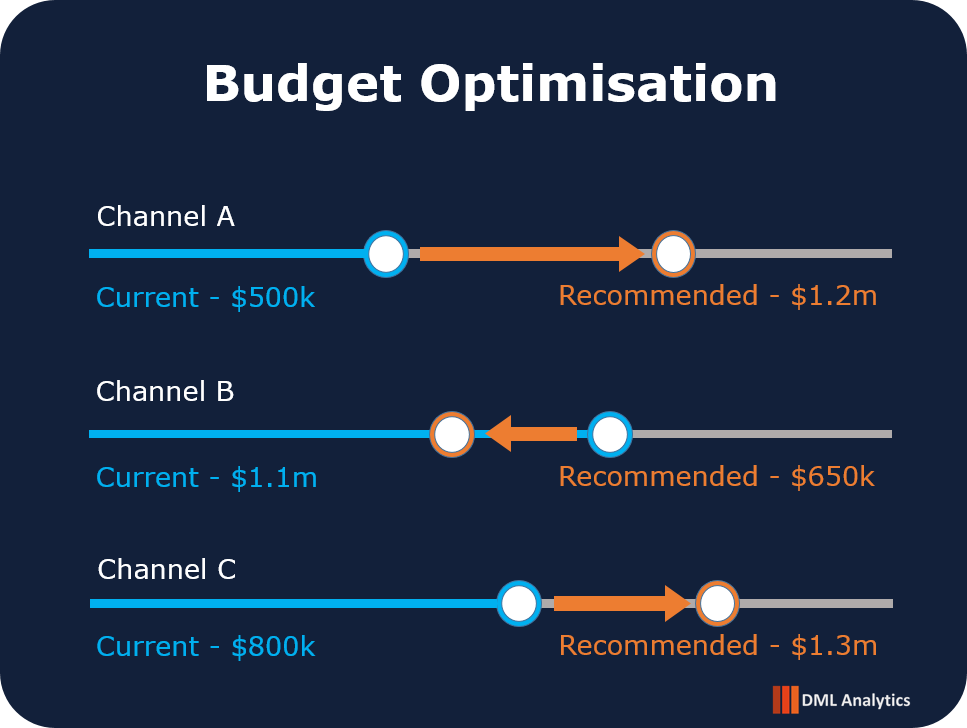
Spend where it pays back
Budget optimisation translates MMM output into practical allocation decisions.
Increase total impact by moving spend to where marginal returns are strongest.
How I work
Data & MarTech Audit
Map key data sources, align on definitions /taxonomy
Check coverage /quality, confirm secure data access
Model Build, Validation & Sign Off
Model/s creation, generate output (resp. curves, ROI/mROI)
Rigorous stress-testing, sense check with team
Model/s sign-off by business
Model Refresh & Governance
Refresh on agreed cadence
Include test results (when available)
Compare actuals vs plan for continuous learning
FAQ
MMM has a number of advantages:
Privacy-friendly, no customer PII required. MMM works from aggregated data, is resilient to cookie signal loss and platform tracking changes.
Holistic, one model for all major drivers. Online and offline media, price, promotions, and external context all in one frame for the full picture.
Flexible, fits different businesses, KPIs and refresh cadences. Whether you’re a retail, subscription or e‑commerce business, MMM can target revenue, acquisitions, web visits or other KPIs, and be refreshed on a practical cadence.
Marketing Mix Models works best when you have:
- Allocated about 7% to 15% of annual revenue to marketing (enough signal to measure).
- Advertised consistently for at least 2 years - ideally 3.
- Used a minimum of 3 paid channels.
If you don’t meet the requirements or you’re thinking to add new channels, MMM may not suit you just yet. Start with incrementality testing and fold results into MMM later on.
Expect around 3 to 6 months before you have results robust enough to support budget and planning decisions.
The timeline depends on data quality, data access, and how quickly teams can align on definitions and inputs. If your data and martech setup is already mature, the process can move faster.
If needed, a data and martech audit can help assess readiness upfront.
We typically need access to your core performance data - KPI data, channel-level spend and delivery, plus promo or key events calendars where relevant.
We’ll also need one or two point people, usually from marketing, analytics, or data engineering, to help align definitions, answer questions, and validate outputs as the project progresses.
In practice, that means around 2 to 4 hours a week from the right people during the first month, then lighter involvement once the project is up and running. If needed, a data and martech audit can help assess readiness upfront.
It does this by using aggregated data (weekly sales, GRPs, spend) and linking changes in business outcomes, such as sales, leads, or revenue, to changes in media activity over time. It quantifies ROI by separating out marketing-driven sales from baseline factors like seasonality, price changes, promotions, and competitors activity.
At least twice a year or quarterly for faster categories. With open-source stacks such as Robyn and Meridian, we could refresh even monthly, once data pipelines are stable.
They answer different questions but could complement each other when properly set up.
- MMM: top-down, uses aggregated data across all drivers (incl. offline + external factors); best for budget allocation & scenario planning.
- Platform/MTA: bottom-up, uses user/device-level (where available), fast for activation decisions; can be incomplete due to privacy restrictions and typically lacks offline & context.
Run a incrementality testing (geo-based or holdout) to estimate lift, then fold those results into the next MMM refresh. Modern MMMs such as Robyn and Meridian support calibration with experiments/priors.
Typically, 2+ years of daily/weekly data across your main paid and owned channels. More history (or more geos) helps with seasonality and robustness; less history can work if you pair MMM with incrementality tests - See data & martech audit for details.
Yes. It relies on aggregated inputs (weekly/campaign/geo) and does not require user-level PII (Personal Identifiable Information), making it inherently more resilient to privacy changes.
No. I work with open-source frameworks like Robyn & Meridian, whenever feasible, keeping work portable, transparent and easy to maintain & scale. This means no vendor lock-in, transparent code, and extensibility as your internal capability grows.